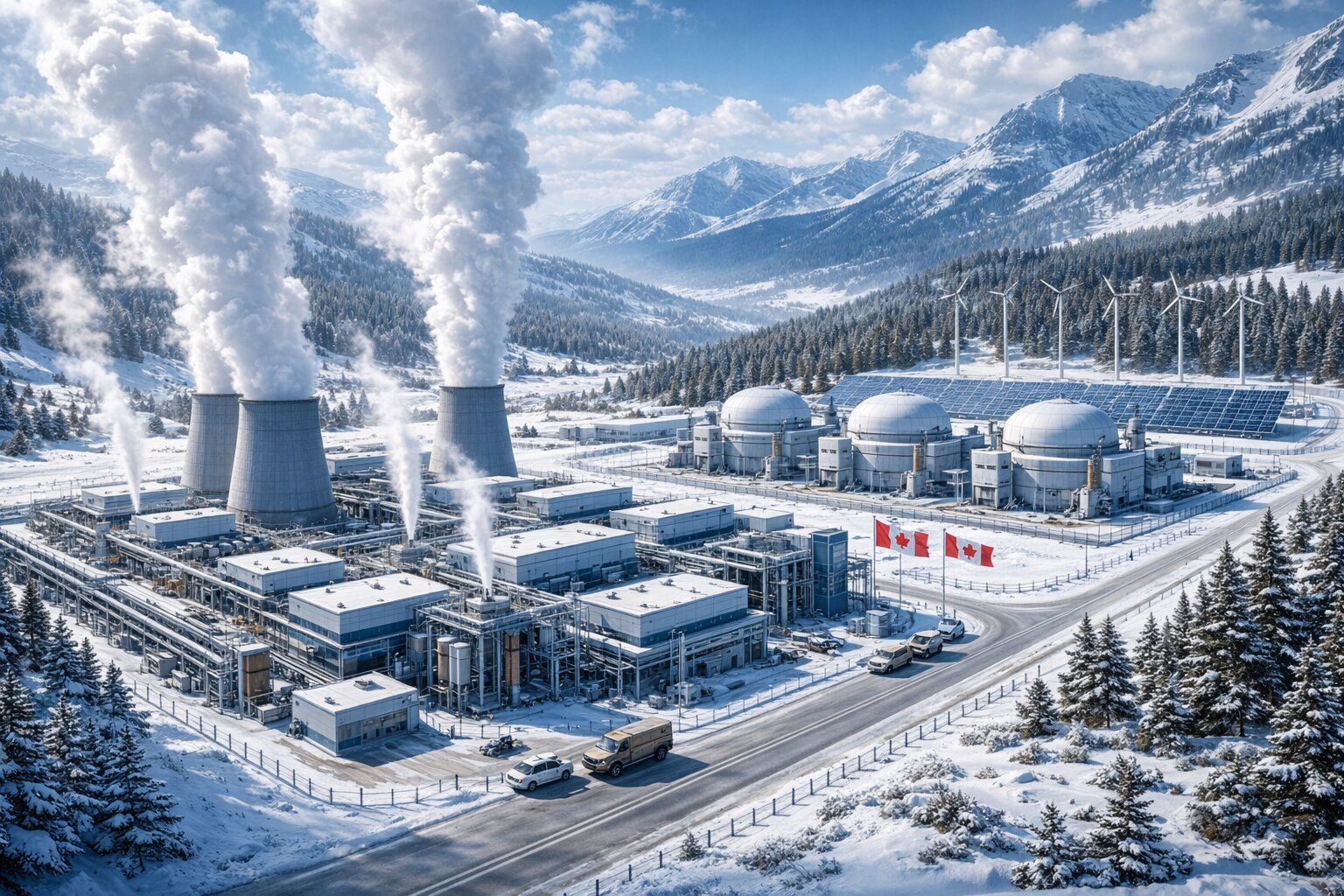

A Note From the Author
As a systems thinker, I weave together solutions from across disciplines to tackle the biggest challenge of our time.

In the summer of 2003, a blackout cascaded across the northeastern United States and Canada in a matter of seconds. Fifty million people lost power. Hospitals ran on backup generators. Traffic lights went dark across eight states and two provinces. Trains stopped. Factories idled. Water treatment plants went offline. The outage caused an estimated $6.4 billion in economic damage across the affected region—in a single day.
Nobody caused it deliberately. It began with something surprisingly mundane—power lines in Ohio sagging into overgrown trees. But when those lines failed, operators didn’t see it. A critical alarm system failed, leaving them blind as the grid destabilized. Power rerouted, overloaded other lines, and triggered a cascade of automatic shutdowns that rippled across the grid faster than the system could recover. The system had no margin. When it failed, it failed everywhere.
That is the nature of electricity. It is critical infrastructure we depend on every day so we can live our lives, yet most people have no idea how it works, who controls it, or how close to the edge it operates on any given winter evening. We flip the switch and the light comes on. We never think about what makes that possible.
For most of Canada’s history, what made it possible was coal, then natural gas, and an extraordinary inheritance of hydropower—rivers dammed and tamed across a country built on water. That system worked. It powered the hospitals and factories and homes that built a modern nation. It also pumped roughly 700 megatonnes of greenhouse gases into the atmosphere every year—and continues to do so today.
Canada is among the top ten countries with the largest cumulative emissions, and thus a significant historical responsibility for causing the climate crisis. On a per-capita basis, it is within the top two.
- Climate Action Network, 2024
Canada’s position is remarkably unique in that nearly 80 percent of the country’s electricity is already clean. Between hydro, nuclear, solar, and wind, the majority of the grid is already emissions-free. Most nations would kill for that starting point. And yet, we have done almost nothing with the advantage. The final 21 percent—the gas plants and the coal plants that keep the system stable during peak demand—still pours over 100 megatonnes of carbon into the air annually. It is the last piece of a puzzle we set down a decade ago and never picked back up.
This is not a technical problem. The technologies that can replace those final plants cleanly and reliably have existed for years. Nuclear power runs at over 90 percent capacity, around the clock, regardless of the weather. Geothermal pulls heat from the earth at the same steady rate in January as in July. Neither is a prototype. Neither requires a breakthrough. They are simply underbuilt—not because they don’t work, but because we never made the decision to build them.
That decision is what this pillar is about—a real commitment to finish what Canada started, and to complete the transition to an electricity system that is clean, reliable, and built to last. The grid that results from that choice becomes the foundation for everything else in this plan. Clean hydrogen. Electric transport. Decarbonized industry. Our ability to adapt to a changing climate. All of it depends on what happens here first.
The question is not whether we can do this. It is whether we are willing to.
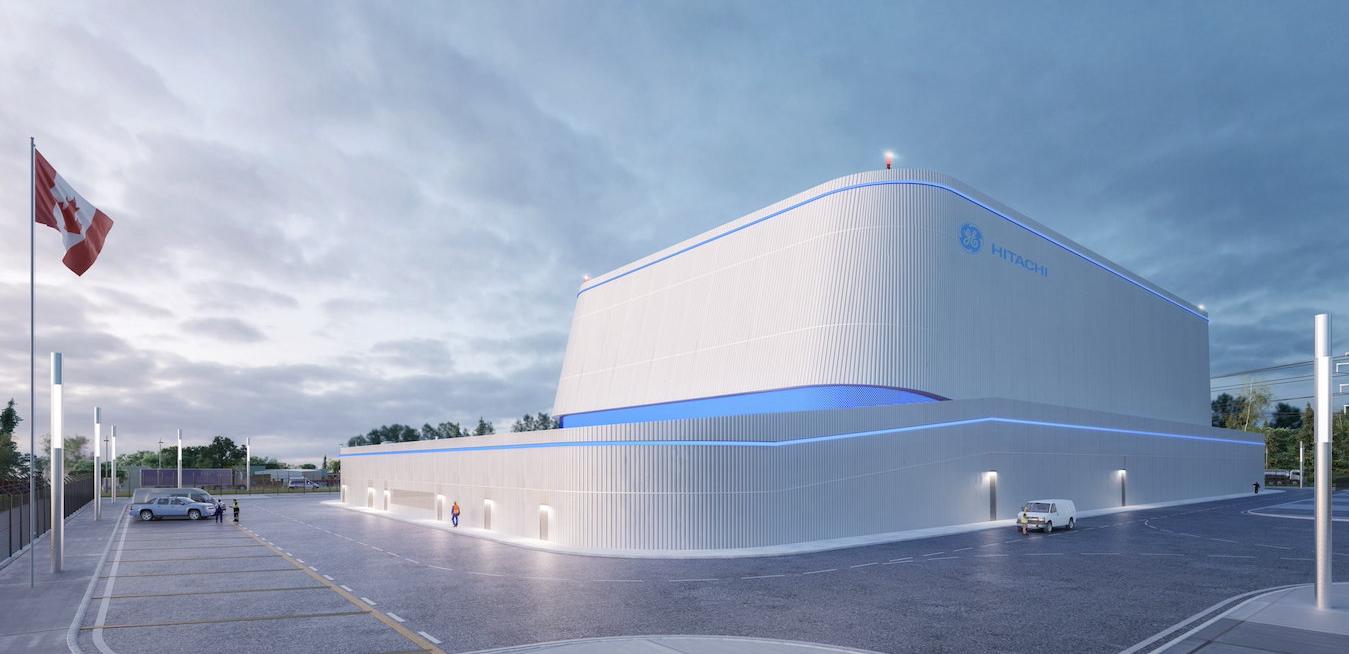
An artist's rendition of GE Vernova Hitachi's BWRX-300 small modular nuclear unit. Courtesy of GE Vernova Hitachi
On the morning of February 15, 2021, temperatures across Texas plunged well below freezing. In Dallas, the coldest conditions in decades pushed the grid into crisis. The electricity grid collapsed under the weight of the winter storm. Natural gas pipelines froze. Coal plants tripped offline. Wind turbines—blamed loudly in the days that followed, though they accounted for a small fraction of the failure—stopped turning. The grid operator issued emergency alerts asking Texans to conserve power. Then the lights went out anyway.
More than four million homes lost heat in subfreezing temperatures. Pipes burst inside walls. People burned furniture to stay warm. At least 246 people died. The outage lasted days in some areas, and when investigators examined what had gone wrong, the answer was not complicated: the system had been built for average conditions, not extreme ones. When the extremes arrived, it had no margin.
Texas is not Canada. But the lesson applies everywhere. Electricity grids are not judged on their best days. They are judged on their worst ones—the February cold snaps, the summer heat domes, the moments when demand spikes and something unexpected fails. In those moments, the only thing that matters is whether firm, reliable power is available. Not power that might be available if the wind is blowing or the sun is shining. Power that will be available, unconditionally, regardless of what the weather is doing.
This is why natural gas has been so difficult to displace. It is not that policymakers ignore climate change. It is that gas plants do two jobs at once—they provide steady baseload power and they respond quickly when demand spikes—and no one has been willing to give up either function without a credible replacement in hand. Solar and wind have grown rapidly, and their costs have fallen dramatically. But they cannot provide firm capacity. The sun does not shine at night. The wind does not blow on demand. Replacing a gigawatt of continuous fossil power with solar requires roughly three gigawatts of nameplate capacity plus storage, translating to 9,000 to 12,000 hectares of land for a single plant’s equivalent output.
Achieving the generating capacity to replace fossil fuels with wind power in Canada would require the deployment, and regular maintenance, of almost 23,000 wind turbines and a supporting battery infrastructure of staggering proportions.
- Appendix 11A - Estimated Number of Wind Turbines Required to Replace Fossil Fuels in Canada
Replacing it with wind requires even more, along with transmission infrastructure to connect generation that is often located far from where the power is needed. That is not an argument against wind and solar—both will play important roles in the transition. It is an argument for being honest about what they can and cannot do, and for building the technologies that fill the gaps they leave behind.
Hydropower is the obvious candidate—Canada already depends on it for nearly 60 percent of its electricity, and it provides exactly the kind of firm, reliable generation the grid needs. But hydro has largely reached the limits of what it can practically contribute. The best sites have already been developed.
New large-scale projects face decades of permitting battles, significant environmental opposition, and costs that have proven difficult to control—Site C in British Columbia, completed in 2024, took more than a decade of controversy and ultimately cost over $16 billion for 1,100 megawatts of capacity. That is a price that few provinces can absorb, and few communities are willing to accept.
Hydropower remains the most widely deployed renewable energy source and is central to global decarbonization strategies. Yet, its long-term reliability is increasingly constrained by climate change.
- Transforming Hydropower: An In-Depth Systematic Review of Climate Change Impacts, ScienceDirect (2025)
More importantly, hydro is becoming less reliable, not more. As Chapter 4 explored, climate change is already disrupting the rainfall and snowpack patterns that hydroelectric dams depend on. In 2023, drought conditions forced British Columbia to import nearly a fifth of its power and cut exports to the United States in half. Quebec’s hydro output dropped by more than nine percent the same year. A grid that depends on rainfall to stay stable is a grid that becomes more vulnerable with every degree of warming. Hydro will remain an essential backbone — but it cannot be the answer to what still needs to be replaced.
Natural gas looks cheap because much of its real cost never appears on the balance sheet. The climate damage from its emissions is treated as someone else’s problem. Long-term fuel costs are assumed to remain manageable even as markets grow more volatile. A gas plant built today locks its owner—and the grid—into decades of fuel dependence and price risk, none of which shows up in the construction budget. Over a thirty-year operating life, those hidden costs accumulate. Geothermal energy, by contrast, has no fuel costs at all. Once the plant is built, the heat is free. Nuclear fuel costs are low and highly predictable. When lifetime operating costs are included rather than just upfront capital, the picture shifts considerably.
Gas tends to win in the first decade. Clean firm power wins over the decades that follow.
The reason gas keeps getting built despite this reality is structural. Electricity markets are designed around short investment horizons. Investors want returns in years, not decades. A gas plant with low upfront capital and quick construction looks attractive in that environment even when its lifetime economics are inferior. Geothermal and nuclear are capital-heavy, slow to permit, and designed to pay off over thirty to fifty years. Private capital, operating under market rules that reward speed and penalise patience, will always prefer gas unless the rules change.
That is where government comes in—not to micromanage projects, but to absorb the risks that private capital cannot carry alone. Long-term revenue certainty, predictable permitting timelines, standardised designs, and lower financing costs through public guarantees are what make clean firm power investable. The goal is not to replace private capital but to create conditions where it can flow toward the right technologies rather than defaulting to the easiest ones.
Power purchase agreements funded 19 gigawatts worth of new capacity in Europe in 2024, and issuers are beginning to integrate battery storage into such contracts to guarantee continuous energy supplies.
- World Economic Forum, 2025
Small Modular Reactors deserve particular attention here because their economics work differently from conventional nuclear. Traditional nuclear plants are expensive in large part because each one is essentially a custom engineering project—designed from scratch, licensed individually, built by a workforce that has to relearn the process every time.
SMRs break that pattern. They are designed to be built in factories, transported to site, and deployed repeatedly from a standardised template. The first unit is expensive. The tenth is cheaper. The fiftieth is cheaper still.
This is how every major industrial technology reached affordability—not through a single breakthrough, but through the accumulated learning that comes from building the same thing over and over. Aircraft. Ships. Solar panels. Each started expensive and became cheap through sustained commitment to production volume. Current SMR costs reflect the fact that we have not yet built enough of them. That is not a permanent condition. It is a starting point.
Together, geothermal and nuclear can do what no combination of intermittent renewables can: replace the firm, continuous power that natural gas currently provides, without requiring a fundamentally different grid to support them. Both operate with capacity factors above ninety percent. Both are unaffected by wind, sunlight, or rainfall. Both can be sized and sited to match regional demand rather than requiring massive transmission corridors to connect remote generation to urban load centres.
Fossil fuels generated approximately 142.4 terawatt-hours of electricity in Canada in 2023. Replacing that output with firm clean power operating at roughly ninety percent capacity factors would require about eighteen gigawatts of new baseload capacity. Spread across provinces over two or three decades, that represents sustained but manageable construction—predictable annual additions of firm capacity that reshape the grid without destabilising it.
Eighteen gigawatts is not a small number. But it is a finite one. And had Texas been building it—had geothermal wells been drawing steady heat from the ground beneath Dallas, had modular reactors been running quietly on the outskirts of Houston—the grid would have had something that February morning that it desperately lacked: capacity that does not freeze, does not depend on fuel deliveries, and does not go dark when the weather turns hostile.
Build approximately 18 gigawatts of firm, emissions-free baseload capacity using a balanced mix of Small Modular Nuclear Reactors (SMRs) and geothermal power over the next two decades. This would be sufficient to replace nearly all remaining fossil electricity generation in Canada.
This is infrastructure spending, not consumption. Once built, these assets operate for decades with predictable costs and minimal fuel price exposure. The lifetime cost comparison is instructive: over thirty years, geothermal generation comes in at approximately $33.76 per megawatt-hour—cheaper than natural gas at $39.44—while SMR nuclear runs higher at $65.32 per megawatt-hour, reflecting its greater upfront capital requirement. Nuclear’s premium is real, but it buys something gas cannot offer: firm, emissions-free power with no fuel price exposure, no carbon liability, and an operational lifespan that extends well beyond the thirty-year window these figures assume.
* Full assumptions and calculations are provided in Appendix 11D – Capital and Operating Cost Assumptions for Clean Baseload Power
These economic returns are conservative. In practice, large clean-energy projects in Canada can claim accelerated depreciation (CCA), which typically reduces taxes substantially in the early years. After the thirty-year amortization period, the same assets continue operating—at the assumed price and operating cost, they generate roughly $19 billion per year in gross operating surplus (about $14 billion after tax) for as long as the plants remain in service. The deeper return is strategic. A grid anchored by firm clean power becomes the platform on which every other objective in this plan depends—the foundation that makes everything built on top of it possible.
* Full assumptions and calculations are provided in Appendix 11E – Revenue and Carbon Offset for Clean Baseload Power
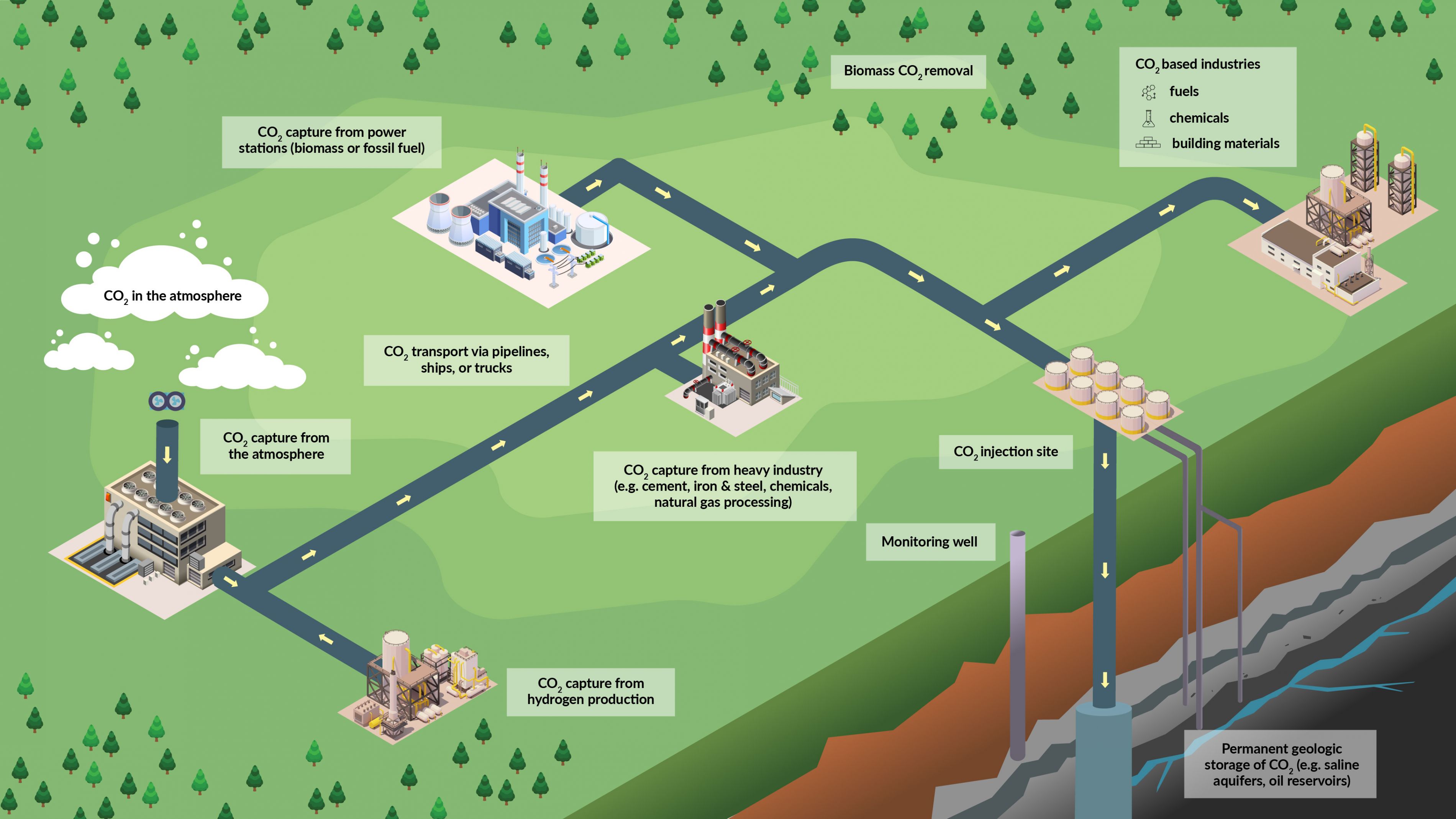
Diagram of carbon management processes as proposed by The Government of Canada
In 2023, the Cascade Power Project came online near Edson, Alberta. It is a modern, efficient natural gas facility capable of generating 900 megawatts of electricity—enough to power roughly 900,000 homes. It was financed over a multi-decade timeline, built to meet growing provincial demand, and designed to run for thirty years. It is also, by any honest measure, exactly the kind of infrastructure that a serious climate plan needs to address.
Not because it should never have been built. Alberta needed reliable power, and at the time of financing, natural gas was the practical answer. But because it will be running well into the 2050s unless something changes—emitting carbon every hour it operates, for decades to come. And it is far from alone. Many of Canada’s largest gas plants are less than fifteen years old, integrated into provincial grids as core reliability assets, with utilities and operators depending on their ability to ramp quickly during cold snaps and unexpected supply shortfalls.
These are not relics of an earlier energy system. They are working infrastructure—assets that keep the grid stable—and they will not simply disappear because better alternatives are being built elsewhere.
This is the problem carbon capture exists to solve. Not as a permanent answer, but as a bridge—a way to reduce emissions from infrastructure that cannot be retired overnight without destabilising the grid, raising prices, and handing political ammunition to the very forces that have resisted climate action for decades. Shutting these plants down prematurely would do all three. Leaving them untouched would lock in another generation of unabated emissions. A responsible path forward must hold both realities at once: the lights must stay on, and emissions must fall.
In order to achieve mid-century net-zero climate goals, natural gas plants (new and existing) will need to use carbon capture, utilization, and storage capabilities.
- Center for Climate and Energy Solutions, (2025)
Carbon capture retrofits offer a way to do both simultaneously. The same workforce that drilled wells and managed reservoirs can develop geothermal systems and operate underground storage sites. Natural gas paired with capture can also support blue hydrogen production during the transition, allowing cleaner energy systems to expand without destabilising the grid in the meantime. The infrastructure is redirected rather than discarded, and the emissions it would otherwise produce are intercepted before they reach the atmosphere.
Carbon capture is not a fringe idea. It is already operating at industrial scale in Canada—at the Quest facility north of Edmonton, which has captured and stored more than ten million tonnes of CO₂ since 2015, and at the Boundary Dam project in Saskatchewan, the world’s first commercial-scale carbon capture system attached to a coal power plant. The technology works. The reason it has not spread further is not scientific. It is economic.
Retrofitting plants for capture is expensive. The equipment alone can cost nearly as much as the original facility. Operating it consumes fifteen to twenty-five percent of the plant’s output. Capture rates approach ninety percent under stable conditions—but never one hundred. And storage infrastructure must be developed and monitored for decades after the last tonne is injected underground.
None of that makes carbon capture optional. It makes it hard. There is a difference.
Without it, the Cascade Power Project and every plant like it continues emitting unabated while nuclear reactors are permitted, geothermal wells are drilled, and the next generation of clean infrastructure slowly takes shape. That process takes decades. Carbon capture is what fills the gap—imperfectly, expensively, but meaningfully.
The economic benefit of three large-scale carbon capture and storage (CCS) projects in Canada could lead to an increase of $2.7 billion in GDP based on a 4-year construction and development timeframe.
- Canada’s Carbon Management Strategy, Government of Canada (2023)
Once collected, the captured carbon must be transported and either stored or put to use—and Canada is well positioned for both. Thousands of kilometres of existing pipelines can move carbon dioxide the same way they move natural gas today. Dedicated storage hubs in geological formations beneath the prairies can lock emissions away permanently.
But storage isn’t the only option. Some of it can be sold. Carbon dioxide is already used in fertilizer production, beverage manufacturing, and enhanced oil recovery. Injected into concrete during curing, it permanently bonds into the structure—locking emissions into bridges, buildings, and roads for centuries. None of these applications can absorb the full volume at national scale, but they offset costs and turn a liability into something closer to a resource.
Gas with capture will cost more than gas without it. That is unavoidable. But the status quo is not free either. Fuel volatility, aging infrastructure, and climate-driven disruptions already push electricity prices higher every year. Carbon capture adds roughly fifty to sixty dollars per tonne in operating costs on top of retrofit capital expenses—costs that exist whether emissions are priced or not. The real question is not whether capture costs money. It is whether emitting carbon should remain free.
In 2025, Canada repealed the federal consumer carbon tax after years of political backlash. For many households it had become a symbol of rising costs with no visible return. In energy communities, it felt punitive. The frustration was understandable. What was rarely explained—and rarely understood—is that pricing emissions is not just about discouraging consumption. It is about changing what gets built. Without a price on carbon, a gas plant that installs capture must compete against one that vents freely. The cleaner facility carries higher costs. The dirtier one does not. In that environment, the market always chooses the cheaper option—and the cheaper option keeps emitting.
Carbon pricing corrects that imbalance. But it only works when it is perceived as fair. Households cannot be penalised where alternatives don’t exist. Energy communities cannot be asked to absorb costs that other regions avoid. Industries competing globally cannot be undermined by uneven rules. The burden has to be shared—across producers, ratepayers, and public financing mechanisms—and the revenue it generates has to flow back into the same regions it is collected from. Carbon pricing that disappears into general revenue and never returns as visible investment will always be politically fragile. Carbon pricing that visibly funds the transition it is asking people to make has a chance of lasting long enough to matter.
Many capture projects struggle economically due to insufficient incentives. Without long-term revenue guarantees, private investment in carbon capture remains limited in many EU Member States.
- Global CCS Institute, Global Status of CCS 2025 Report
The financing tools required are not complicated. Long-term contracts give investors the certainty they need to commit. Federal loan guarantees reduce the risk enough for private capital to follow. Performance-based incentives tied to actual capture rates ensure public funds support projects that genuinely reduce emissions. These are the same mechanisms used to finance every major energy infrastructure project in Canadian history. The difference is that this time, they need to be pointed at capture rather than extraction.
Markets respond to the rules they are given. Require capture on new gas plants from the outset, and the economics change permanently. Gas generation no longer wins by default. The transition moves forward instead of being quietly undermined every time a new approval goes through without it.
As that transition unfolds, the role of natural gas gradually changes. Plants run fewer hours. Battery storage handles short spikes in demand. Hydrogen and other long-duration systems cover the gaps that remain. Over time, natural gas shifts from the default to the reserve—available when needed, no longer the foundation. Retirement decisions get made from stability rather than crisis. And the infrastructure decisions made today stop locking in emissions for decades to come.
The Cascade Power Project will keep running. For thirty years, it will generate power for hundreds of thousands of Alberta homes—reliably, continuously, exactly as designed. The question was never whether it would run. The question is whether the carbon it produces escapes into the atmosphere or gets intercepted before it ever gets there. That is a choice—not a technical limitation, not an economic inevitability. A choice. And it is one Canada can make right now.
Retrofit carbon capture on Canada’s high-utilization natural gas power plants while requiring capture on all new large-scale gas facilities. Focus retrofits on the portion of the fleet responsible for the majority of fossil electricity emissions rather than low-utilization peaker plants.
If retrofit costs were fully passed through to ratepayers in provinces with significant natural-gas generation, an average household consuming roughly 7,000–8,000 kWh per year would see electricity costs increase within this range. However, under a federal low-interest financing and incentive structure, rate impacts could be reduced substantially by spreading capital repayment over longer periods and offsetting costs through national carbon-pricing revenue.
* Full assumptions and sensitivity ranges provided in Appendix 11F – Carbon Capture Retrofit Cost Model
Carbon capture functions primarily as a defensive investment. Its purpose is not profit but damage containment over the lifetime of infrastructure that is already built.
At a carbon price of $170 per tonne, captured emissions represent roughly $3.7 billion per year in avoided carbon exposure. Over time, that avoided liability offsets a substantial portion of operating costs and reduces long-term regulatory risk.
Over three decades, the cumulative emissions avoided approach the equivalent of an entire year of Canada’s current national emissions. That scale is not trivial. It provides space for nuclear, geothermal, storage, and hydrogen systems to expand without allowing another generation of unabated emissions to accumulate.
The objective is stability during transition. Existing infrastructure does not disappear simply because better systems are coming online. Until replacement capacity is fully built, containment is the responsible course.
* Full assumptions provided in Appendix 11G – Carbon Capture Retrofit: Lifetime Impact and Cost
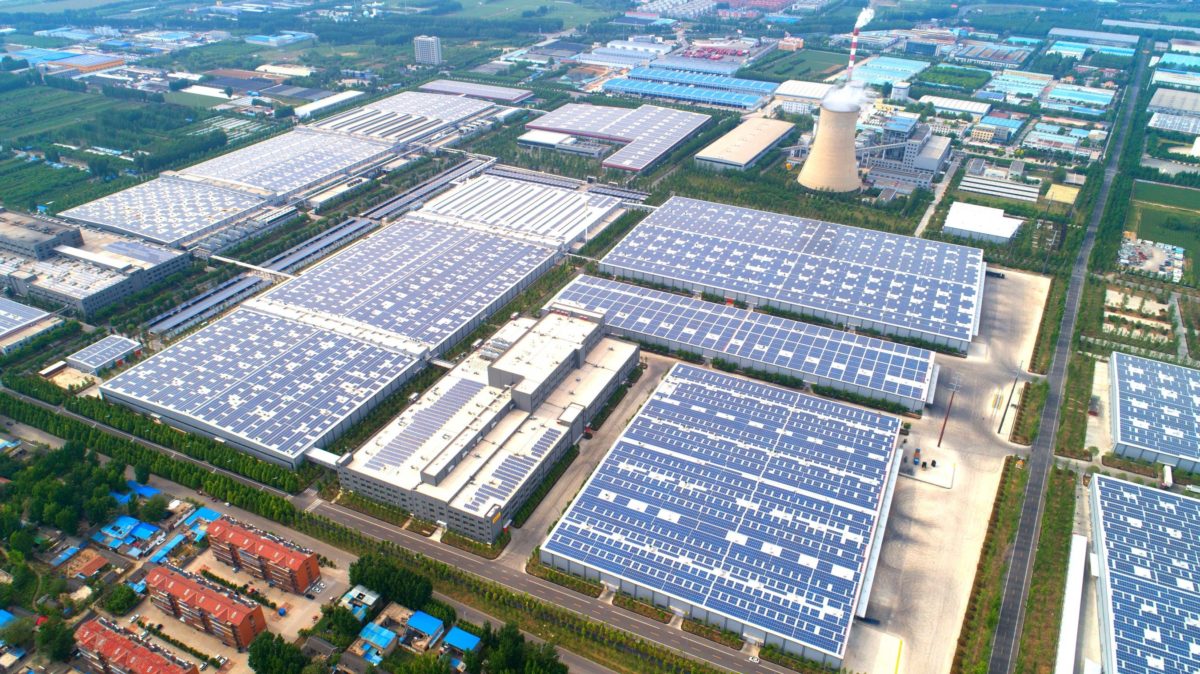
The world's largest rooftop solar power plant is powering a Chinese industrial park; source: PV Magazine
Fly over any major Canadian city and look down. Flat rooftops stretch for blocks—distribution centres, malls, grocery stores, big-box retailers, and industrial parks. Most of them sit empty under the sun. Collectively, they represent one of the largest unused pieces of infrastructure in the country.
Calgary alone contains well over 150 million square feet of industrial space. Amazon’s footprint in the city exceeds seven million square feet. A single modern fulfillment centre often spans 600,000 to one million square feet. Most of it sits exposed to the sun, doing nothing.
Solar requires roughly fifty square feet per kilowatt of installed capacity. That means one million square feet of usable rooftop could support about twenty megawatts of solar generation. Amazon’s warehouses in Calgary alone represent around 140 megawatts of potential capacity. And that is just one company, in one city.
Industrial rooftops alone could support over 17 gigawatts of solar generation, producing roughly 4.4 percent of Canada’s annual electricity demand.
- Appendix 11H - Estimating Canada’s Commercial Rooftop Solar Capacity
Scale that across Toronto, Vancouver, Edmonton, Montreal, Ottawa, and Winnipeg. Canada’s industrial inventory alone exceeds two billion square feet of warehouse and logistics space, much of it in single-storey buildings with vast flat roofs. Even after accounting for structural limitations, shading, and mechanical equipment, the usable potential quickly rises into the tens of gigawatts of distributed solar capacity. Industrial rooftops alone could support over 17 gigawatts of solar generation—enough, at an 18 percent capacity factor, to produce more than 27,000 gigawatt-hours of electricity each year. That is enough to power roughly 2.5 million Canadian homes—more homes than exist in the entire Greater Toronto Area—from rooftops that are already built, already connected to the grid, and currently doing nothing at all.
The potential extends well beyond industrial buildings. Retail complexes, shopping centres, schools, hospitals, and government buildings would push the national total considerably higher—likely into the five to six percent range of total electricity demand. Calgary receives more annual sunshine than Rio de Janeiro. Even Vancouver, despite its reputation for grey skies, receives more sunshine annually than parts of southern Germany—a country that has installed more than 117 gigawatts of solar capacity, much of it on rooftops, and now generates enough to supply more than a third of its electricity demand on sunny days.
In 2025 alone, Germany deployed 17.5 gigawatts of new solar capacity. The lesson is not that Germany has better sunshine. It is that when rooftop solar is treated as standard infrastructure rather than a niche technology, deployment scales rapidly—and the electricity shows up exactly where it is needed most.
Around 31% of Germany’s photovoltaic production comes from small arrays, most of which are on rooftops. They generated around 15 TWh of electricity in 2020.
- Renewable Energy Focus, Volume 42 (2022)
That last point is the real value of rooftop solar. Not just how much it generates, but where. Remote solar farms require land acquisition, transmission expansion, and long development timelines. Rooftop solar avoids all three. The buildings are already there. The connection points are already in place. The electricity is generated inside the urban distribution networks that carry the heaviest daytime loads—which means every megawatt produced on a warehouse roof is a megawatt that does not need to travel across long transmission corridors or come online from a natural gas peaker plant.
For grid operators, that matters enormously. Lower daytime peaks mean fewer emergency gas turbines ramping up during sudden demand spikes. Transmission upgrades can be delayed or avoided altogether. Utilities gain breathing room in systems that are often operating close to their limits. Nuclear and geothermal anchor the grid with steady baseload power around the clock. Rooftop solar quietly reduces how much of that power cities need to draw during the hours the sun is shining.
The question is how to deploy it at scale—and the answer has less to do with technology than with incentives. Right now, the owner of a Calgary warehouse has almost no reason to put solar panels on the roof. The upfront cost is significant. The payback period stretches over decades. And if they sell the building before that period ends, they’ve paid for an asset that benefits someone else. The economics don’t work, so nothing happens, and the roof sits empty.
Property Assessed Clean Energy financing (PACE) changes the math. The model originated in the United States and already exists in Canadian law: Alberta, Ontario, Nova Scotia, and several other provinces have passed enabling legislation, and programs are running in cities like Edmonton, Ottawa, and Toronto. But almost all of them focus on small residential retrofits. Nobody has deployed it at the scale that large commercial buildings require.
To date, PACE has funded $19 billion in clean energy improvements to over 380,000 homes and commercial buildings across the United States—creating an estimated 250,000 jobs and stimulating $36 billion in local economic activity.
- PACENation, PACE in 2025: Poised for Growth
In practice, it would look something like this: A warehouse owner in Mississauga gets a letter telling her that her building qualifies for a rooftop solar installation under the national commercial PACE program. The upfront cost is $2.3 million. Under PACE, she does not write a cheque. Instead, the cost is attached to her property as a long-term assessment, repaid through her property tax bill over twenty-five years. Her annual payment is roughly $115,000. Her electricity bill drops by $140,000 the first year. She is cash-flow positive from day one. If she sells the building, the assessment transfers to the new owner along with the solar system—she is never left holding costs she cannot recover.
She signs. The panels go up, and the roof starts generating power.
Multiply that across every qualifying warehouse, distribution centre, and retail complex in the country—tens of thousands of buildings, most of them sitting under the same sun, most of their owners facing the same calculation—and the national numbers start to move. Private lenders provide the capital. The banking system handles underwriting. The government’s role is to back those loans at low interest rates, reducing the cost enough to make the numbers work. Canada doesn’t need to invent this model. It just needs to scale it.
There will be objections. Some roofs are aging. Some structures cannot handle additional load. Some businesses will resist capital expenditures even with favourable financing. These are real constraints—but they are manageable ones. Engineering assessments determine structural suitability. Mandates can be phased in gradually. Exemptions can be granted for buildings nearing the end of their lifecycle. A levy on buildings that choose not to participate encourages adoption while preserving flexibility where installation is genuinely impractical.
The infrastructure is already there. The sun is already hitting those rooftops every day. The only thing missing is the decision to stop wasting this opportunity. Next time you fly over a Canadian city and look down, those rooftops will either be doing something or they won’t. That is not an engineering question. It is a political one.
Install approximately 17 gigawatts of distributed rooftop solar capacity across Canada’s commercial and industrial buildings—warehouses, retail centers, malls, logistics facilities, and other large flat-roof structures—using Property Assessed Clean Energy (PACE) financing.
Under this model, installations are financed through long-term property tax assessments tied to the building rather than the owner. If the property changes hands, the repayment obligation transfers with it. This structure removes one of the largest barriers to adoption—the risk that a building owner pays for the system but sells the property before the investment has fully paid off.
Participation would be required for suitable commercial rooftops within a defined implementation period. Buildings that choose not to install solar would pay a levy instead, encouraging participation while allowing flexibility where installation is impractical.
Because installations are financed through property-tax-linked loans rather than direct public spending, the capital investment is funded primarily by private financing, not taxpayers. This policy effectively transforms millions of square metres of unused roof space into productive energy infrastructure while reducing electricity demand across Canada’s urban grids.
Under a PACE framework, private lenders provide the installation capital while repayment occurs through property tax assessments attached to each building. Because property tax obligations carry extremely low default risk, financing rates can remain relatively low while still attracting institutional capital. This structure allows tens of billions of dollars in energy infrastructure to be deployed without requiring equivalent public spending.
Since repayment occurs through long-term property assessments, the electricity produced by rooftop systems typically offsets a large portion of each building’s power consumption. In many cases the value of the electricity produced can exceed the annual financing payment, creating immediate positive cash flow for building owners.
At a national scale, distributed solar installed through commercial rooftops would produce enough electricity each year to offset the power consumption of millions of homes while reducing strain on provincial grids during daylight hours. Because Canada’s electricity grid already relies heavily on low-carbon sources, the emissions impact is smaller than in fossil-dominated grids. However, distributed solar still reduces fossil generation, improves grid resilience, and offsets billions of dollars in electricity consumption each year.
Unlike centralized generation projects, these systems are built directly at the point of consumption, meaning a large portion of the electricity is used locally rather than transmitted across long distances. This approach avoids the land acquisition, transmission expansion, and long permitting timelines associated with large utility-scale solar farms.
* Full assumptions and calculations are provided in Appendix 11J – Estimating Canada’s Commercial Rooftop Solar Returns
Three objectives. Three different scales. Three different problems—the firm power the grid depends on, the emissions locked into infrastructure that cannot simply be switched off, and the vast untapped generation sitting idle on rooftops across every major city in the country.
None of them is sufficient on its own. Nuclear and geothermal replace the function of natural gas but take decades to build at scale. Carbon capture buys time but does not build the future. Rooftop solar reduces urban demand but cannot anchor a grid through a January cold snap. Each objective needs the others. Together, they form something that none of them is alone: a coherent strategy for moving Canada’s electricity system off combustion without gambling with the reliability that everything else depends on.
That reliability is not incidental. It is the whole point. Every solution that follows in this plan—clean hydrogen, electrified transport, decarbonised industry—depends on a power grid that can be trusted to deliver. A grid that flickers when the weather turns hostile, or prices that spike every time a gas plant retires without a replacement in place, will not just inconvenience people. It will erode the political support that makes any of this possible. The transition does not fail because the technology stops working. It fails when people stop believing it can work for them.
Pillar I is the answer to that concern—not a theoretical one, but a practical one. Firm clean power that runs regardless of the weather. Captured emissions from plants that will keep running anyway. Electricity generated on the rooftops of buildings that already exist. These are not aspirational commitments. They are infrastructure investments with known costs, known returns, and a clear role in a system that needs all three to hold together.
The investment is large. But the question has never been whether Canada will spend money on its electricity system. Ageing infrastructure will be replaced. Demand will grow as the economy electrifies. The only real choice is what gets built. Every dollar spent on firm clean power instead of another gas plant is a dollar that stops paying fuel costs in year five and starts generating returns in year fifteen—and keeps generating them for decades after that.
What Pillar I builds is not just a cleaner grid. It is the foundation on which everything else in this plan depends. Pillar II builds the hydrogen economy. Pillar III prepares communities for the climate impacts already underway. Pillar IV repairs the damage already done. None of that is possible without reliable, affordable, emissions-free electricity flowing through the system first.
The grid does not need to be perfect before the transition can begin. It needs to be stable enough to carry the weight of what comes next. Pillar I makes it stable. The rest follows from there.
Pillar I deploys three major forms of energy infrastructure across Canada’s electricity system.
Firm clean baseload generation
Carbon capture retrofits
Commercial rooftop solar
Total infrastructure deployment
Capital sources
The investment required to clean the grid is large, but much of it represents infrastructure Canada will need to build regardless. Electricity demand is expected to grow significantly in the coming decades as transportation, industry, and building systems electrify. At the same time, much of the country’s existing fossil fuel generation will reach the end of its operating life.
The question is not whether Canada will invest in new power infrastructure. That will happen regardless. The question is what kind of infrastructure replaces the system that exists today.
Pillar I significantly expands Canada’s clean electricity supply while reducing emissions from the fossil infrastructure that remains in service during the transition.
New electricity generation
Grid impact
Emissions reductions
Total emissions reduction
* Full assumptions and calculations are provided in Appendix 11K – Estimating the Aggregate Returns of Pillar I
The grid that emerges from the three objectives in this Pillar is not a finished product. It is a starting point—stable enough, clean enough, and reliable enough to carry everything that comes next. That is exactly what a foundation is supposed to be.
Curious about why I wrote this book? Read my Author’s Note →
Want to dive deeper? A full list of sources and further reading for this chapter is available at: www.themundi.com/book/sources
As a systems thinker, I weave together solutions from across disciplines to tackle the biggest challenge of our time.
Help shape the future! Sign up to receive behind-the-scenes updates, share your ideas, and influence the direction of my upcoming book on climate change.